How many days of food and water should you store?
The honest per-person numbers for a 3-day, 2-week and 1-month supply, plus the easiest way to turn your pantry into an exact days-of-supply figure instead of a guess.
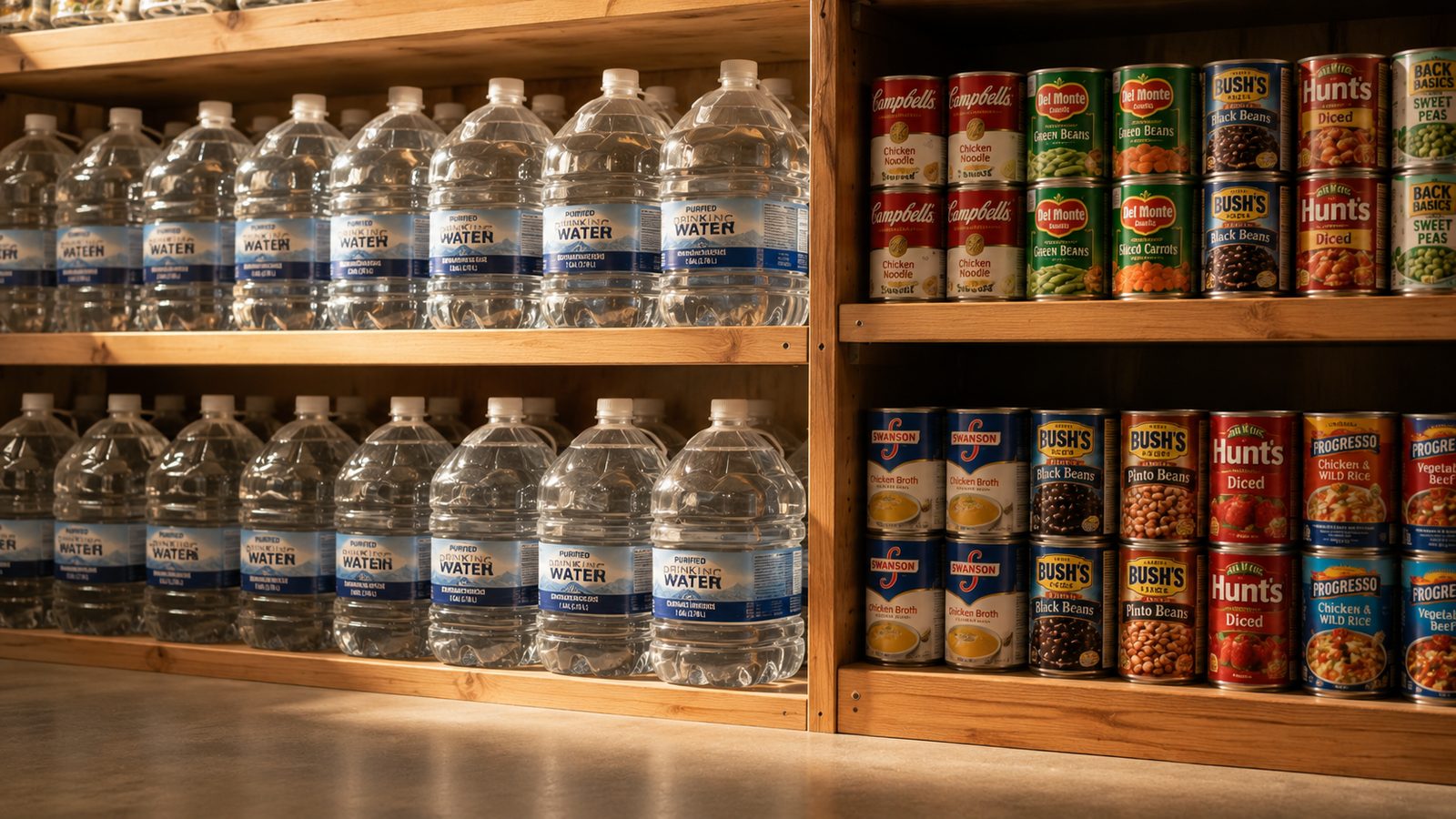
Stored water and shelf-stable food: the two numbers every supply plan starts with.
Ask ten preppers how much to store and you'll get ten answers. The agencies are actually consistent: start at 3 days, build to 2 weeks, and treat 1 month as the gold standard. The hard part is knowing where you stand against that target today. Here are the real numbers, and how to stop guessing.
The numbers, per person
- Water
- 1 gallon (~4 L) per person, per day
- Food
- ~2,000 kcal / adult · ~1,500 kcal / child, per day
- Minimum
- 3 days (72 hours)
- Recommended
- 2 weeks (14 days)
- Gold standard
- 1 month or more
Water comes first
You can last weeks without food but only days without water, so it's the number to nail first. The standard planning figure is one gallon per person per day, about half for drinking and half for cooking and basic hygiene. Scale it up in hot climates, at altitude, or for pregnant and nursing women, the sick, and pets.
That means a two-week supply for a family of four is roughly 56 gallons. Store it in food-grade containers, keep it cool and dark, and rotate or refresh it on a schedule so it's there when you need it.
Food: count calories, not cans
The classic mistake is counting items, like "we've got loads of pasta," instead of energy. What keeps a household going is calories per person per day: plan around 2,000 for an adult and 1,500 for a child. A family of two adults and two children needs about 7,000 kcal a day, so a two-week supply is roughly 98,000 calories of food everyone will actually eat.
Favor shelf-stable, calorie-dense, no-cook-friendly food: canned proteins and vegetables, rice and beans, oats, peanut butter, cooking oil, and comfort items that keep morale up. Match it to your family's real diet; a stockpile nobody wants to eat is a stockpile that gets wasted.
Turn it into one honest number: days-of-supply
This is where most people stall. Tallying calories and gallons by hand across a closet, a garage and a chest freezer is exactly the kind of math that never gets done. The fix is to let an app do it: log what you have once, and it computes how many days you're covered for food and water, sized to your household, and tells you which one runs out first.
Don't forget the rest of the household
- Medications: keep a buffer of any prescriptions and a basic first-aid kit.
- Pets: a gallon of water and a day's food per pet, on the same timeline as yours.
- Special diets: infants, allergies and medical diets need their own dedicated supply.
- Cooking & sanitation: a way to heat food and water without power, plus hygiene basics.
The bottom line
Set a target — 3 days to get started, 2 weeks to be comfortable, a month to be genuinely resilient — then measure against it honestly. Storing supplies is only half the job; knowing your number, and keeping it rotated so nothing expires, is the half that actually keeps you ready. Next, learn the rotation system that stops waste in our FEFO guide, or see all our picks in the 10 best prepper apps of 2026.
FAQ
How much water should I store per person?+
About one gallon (~4 liters) per person per day for drinking and basic sanitation. A two-week supply is roughly 14 gallons per person, and more in hot climates or for nursing mothers, the sick, and pets.
How many days of food should a prepper store?+
A minimum of 3 days, ideally 2 weeks, with one month the gold standard for serious preparedness. Plan by calories — about 2,000 per adult and 1,500 per child per day, not by counting cans.
How do I calculate my days of supply?+
Add up the calories of the food you have and divide by your household's daily need; do the same for water against one gallon per person per day. A days-of-supply app like Stockpile does this automatically and flags your weakest link.